
Getting started
Understand accounts, categories, and funds
On this page
These three ideas answer different questions. Keeping them separate makes transaction review and reports easier to understand.
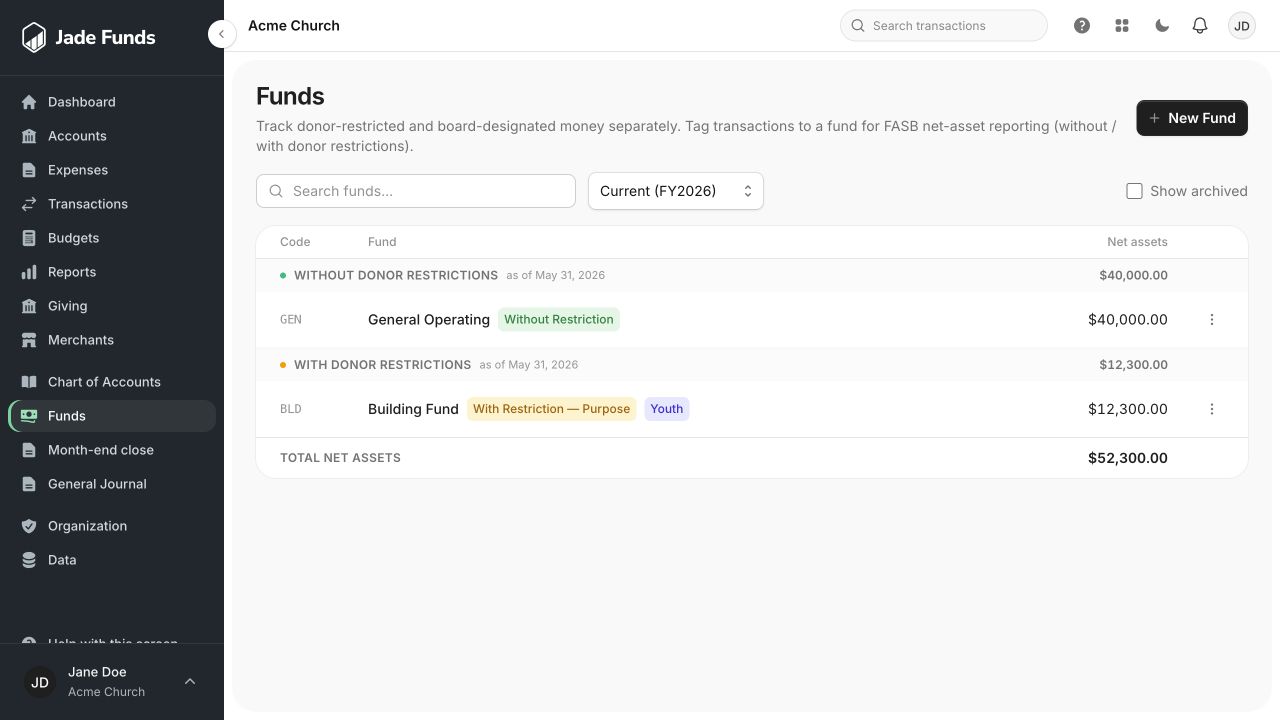
1. New Fund opens fund setup.
2. Choose the fiscal year for the displayed activity.
3. Open a fund to inspect the activity behind its balance.
Financial accounts: where money is held
A financial account represents something such as your checking account, savings account, credit card, or petty cash. Open Accounts to see its activity. A bank account may hold money belonging to several funds.
Categories: what the transaction is
Categories are entries in your chart of accounts, also called ledger accounts. Examples include Contributions, Utilities, Office Supplies, and Youth Events. They explain the type of income or expense; balance-sheet categories describe what your church owns and owes.
Funds: what the money is for
A fund tracks resources by purpose or restriction. Operating and Missions might be separate funds even when their money sits in the same checking account.
A church example
For an illustrative $120 youth-event purchase, the financial account might be Checking, the category Youth Events, and the fund Operating. If the purchase uses donor-restricted youth money, select the appropriate restricted fund instead, consistent with the gift’s terms.
Keep the distinctions clear
A budget amount, fund balance, and bank balance measure different things. None should be treated as interchangeable. See Understanding bank and book balances and Reading fund balances.
Was this article helpful?
Still need a hand?
Tell us what you were trying to do and what happened. Leave passwords and bank login details out of your message.
Contact Jade Funds support